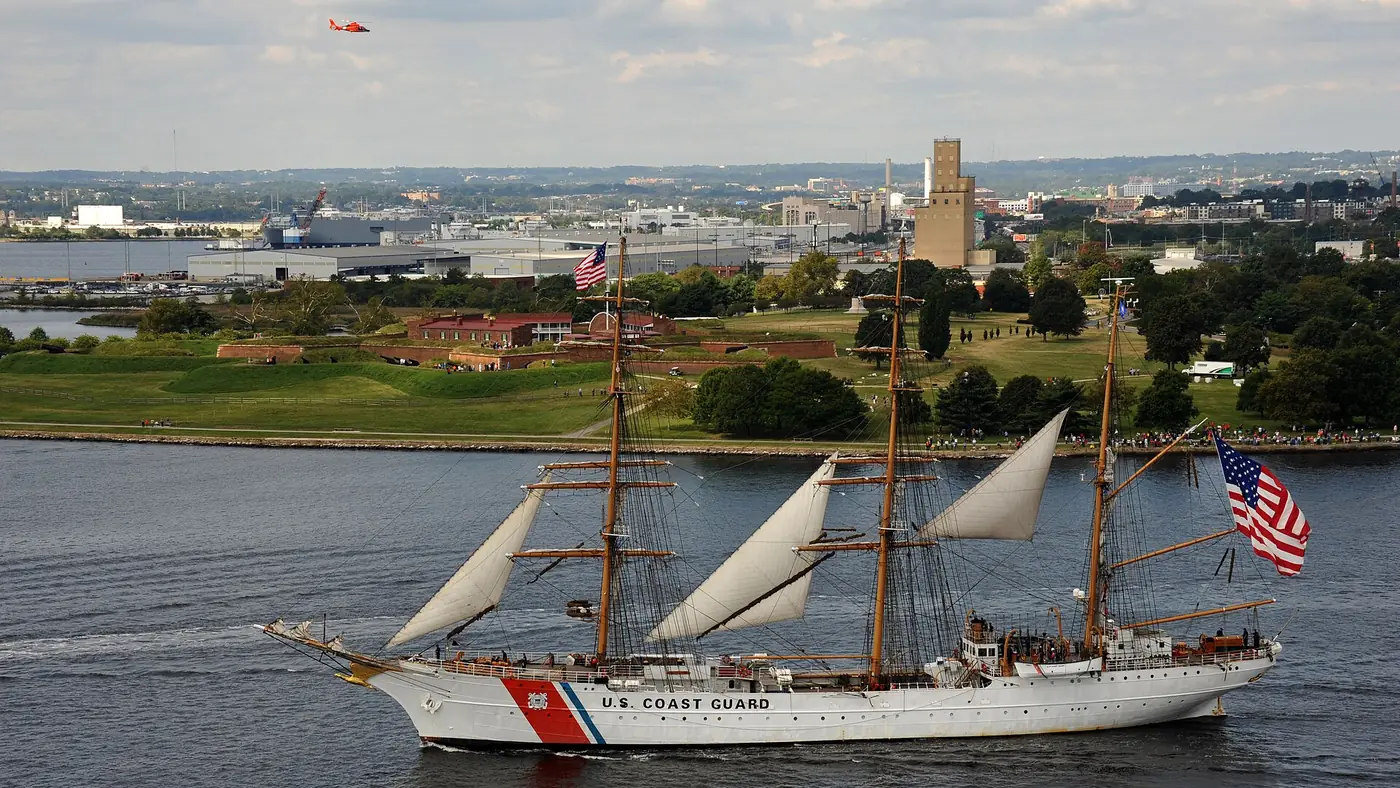
Booking choice: The history boat tour, from $28 per person. Check dates Tour details
On 13 and 14 September 1814 a British fleet fired between 1,500 and 1,800 shells at Fort McHenry over 25 hours. About 1,000 men held the fort, and four of them were killed. At 9:00 a.m. on the 14th the garrison raised a 30-by-42-foot flag, and a lawyer watching from a ship among the British fleet began the poem that became "The Star-Spangled Banner".
This guide follows the Park Service's history pages and its Historical Handbook, plus the Smithsonian's record of the flag. Where accounts disagree (one NPS page has the bombing end a day later than the others), we use the date most NPS pages give.
The quick answer
The British bombarded Fort McHenry from about 6:30 a.m. on 13 September to 7:30 a.m. on 14 September 1814 and failed to get past it. The fort lost 4 killed and 24 wounded. Francis Scott Key, on a truce ship, wrote "The Defense of Fort M'Henry", which became the national anthem on 3 March 1931. The original flag is at the Smithsonian's National Museum of American History in Washington, DC, free to see.
What happened at Fort McHenry in 1814?
Less than three weeks after burning Washington, the British attacked Baltimore by land and sea. Their army was stopped east of the city, their fleet shelled Fort McHenry for 25 hours without getting past it, and on 14 September they withdrew.
The key dates, from the NPS history and its bombardment accounts:
| Date | What happened |
|---|---|
| 18 June 1812 | The United States declares war on Britain |
| June 1813 | Major George Armistead takes command and orders a flag big enough for the British to see |
| 19 August 1813 | Mary Pickersgill delivers the garrison flag and a smaller storm flag |
| 24 August 1814 | The British win at Bladensburg and burn Washington |
| 12 September 1814 | About 5,000 British troops land at North Point; their commander, Maj. Gen. Robert Ross, is killed |
| 13 September, about 6:30 a.m. | The bomb ship Terror fires the first shell at the fort |
| 13 to 14 September, around midnight | British barges try to slip past up the Ferry Branch and are driven back |
| 14 September, 7:30 a.m. | The last bomb, from Volcano. The fleet gives up |
| 14 September, 9:00 a.m. | The storm flag comes down, the garrison flag goes up, fifes and drums play "Yankee Doodle" |
| 20 September 1814 | Key's poem is first printed in a newspaper, the Baltimore American |
On land, 15,000 American troops held earthworks on Hampstead Hill, east of downtown. The British army looked at them and pulled back to its ships.
Why couldn't the British capture Fort McHenry?
Because their ships couldn't get close enough. Sunken merchant ships blocked the channel, the shore batteries kept the warships at a distance, and mortar shells lobbed from 2 miles away could damage the fort but never take it.
The Royal Navy sent five bomb ships (Terror, Aetna, Devastation, Meteor and Volcano) and the rocket ship HMS Erebus. The bombs were mortar shells of about 200 pounds with fuses cut for a 27-second flight; many burst in the air above the fort, Key's "bombs bursting in air". Erebus supplied "the rockets' red glare".
- The channel: 8 to 10 merchant ships were scuttled across it. Admiral Cockburn admitted they kept the fleet from passing the fort.
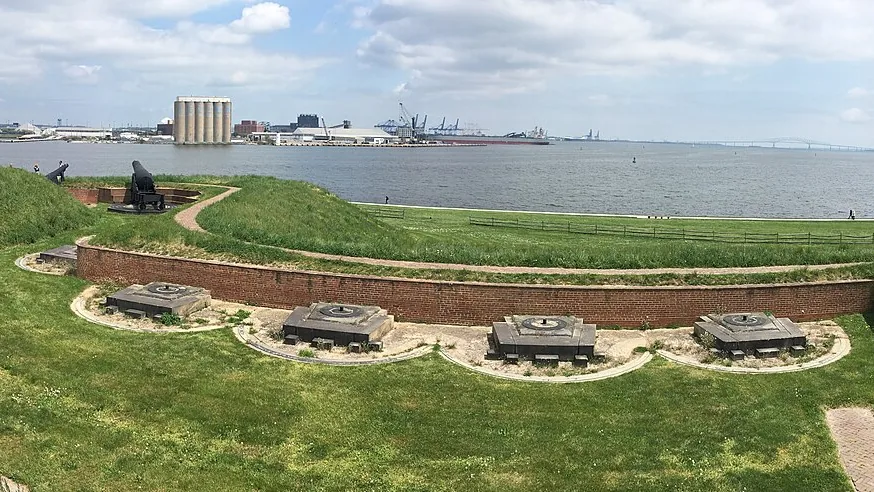
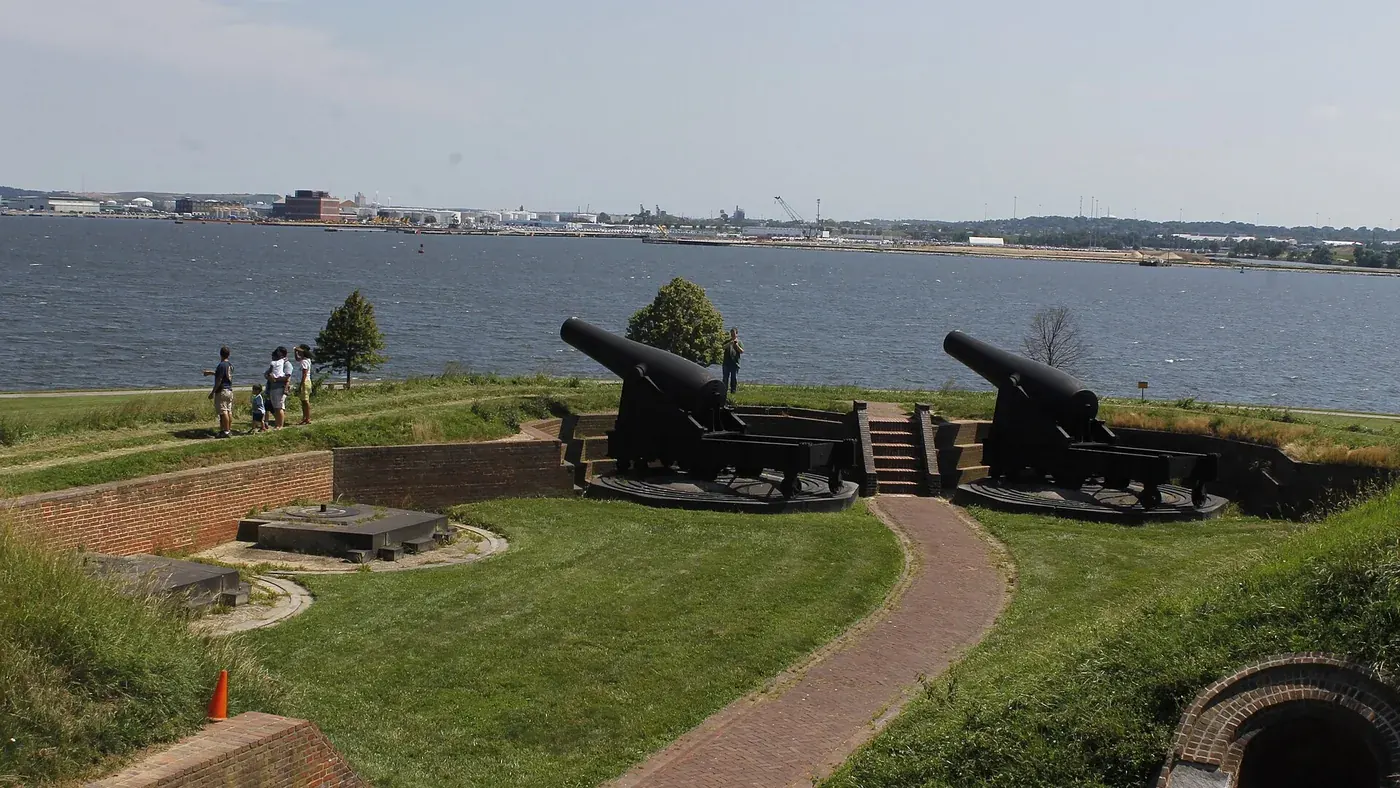
- The range: the fort's water batteries reached about a mile and a half. When British ships edged closer they were hit and pulled back within half an hour.
- The night attack: around midnight about 1,000 men in 20 barges tried to sneak up the Ferry Branch behind the fort. Only 9 barges with 128 men pressed on, and the guns of Forts McHenry, Babcock and Covington drove them off (NPS).
See the river the fleet came up: Baltimore Heritage's history boat heads out toward the fort with a live guide.
Check dates for the history boat tourHow many people died at Fort McHenry?
Four defenders were killed and 24 wounded in the 1814 bombardment, out of about 1,000 men at the fort. The British reported one man wounded in the attack on the fort.
The figure is the one the NPS Historical Handbook gives: "Of the 1,000 defenders, only 4 were killed and 24 injured." The dead were Thomas Beeson of the Washington Artillery and Thomas Messenger of the U.S. Chesapeake Flotilla, killed early on the 13th; Lt. Levi Clagett of the Baltimore Fencibles, killed about 2 p.m.; and Sgt. John Clemm, killed by a shell fragment. The worst near-miss: one bomb crashed into the powder magazine, with about 200 barrels inside, and did not go off.
Most of the dying in the Battle of Baltimore happened on land, at North Point:
| Part of the battle | American losses | British losses |
|---|---|---|
| Bombardment of Fort McHenry | 4 killed, 24 wounded | 1 wounded |
| North Point and Hampstead Hill | 24 killed, 139 wounded, 50 captured | 39 to 46 killed, 251 to 295 wounded |
| Whole battle | 28 killed, 163 wounded, 50 captured | 39 to 46 killed, 252 to 296 wounded |
Figures for the land battle are from Wikipedia's summary of the official returns. The fort's deadliest year came later: in 1918 and 1919, when it was U.S. Army General Hospital No. 2, influenza sickened about 300 people there and killed at least 100 (NPS).
How did Francis Scott Key write the Star-Spangled Banner?
Key, a lawyer sent to free a captured American doctor, watched the bombardment from a truce ship among the British fleet. When he saw the big flag flying on the morning of 14 September he started the poem, and he finished it that night in a Baltimore tavern.
Key, the prisoner-exchange agent John Skinner and Dr. William Beanes were held on the truce ship Stephen Decatur until the attack was over, so they could not warn anyone of the British plans. After the ship docked at Fells Point, Key finished the verses at the Indian Queen Tavern (NPS). He wrote four stanzas, titled them "The Defense of Fort M'Henry", and set them to a popular tune, "To Anacreon in Heaven".
Over 1,000 handbills were printed and handed out in the city and at the fort. On 20 September 1814 the poem appeared in the Baltimore American, and within six weeks newspapers in all 18 states had run it.
Key himself: born 1 August 1779 in Frederick County, Maryland; District Attorney for Washington, DC, from 1833 to 1841; died 11 January 1843, buried at Mount Olivet Cemetery in Frederick. He also enslaved people and opposed abolition, which the Park Service covers directly.
When did the Star-Spangled Banner become the national anthem?
On 3 March 1931, when President Herbert Hoover signed House Resolution 14, nearly 117 years after Key wrote it.
The song took a century to get there (NPS):
| Year | Step |
|---|---|
| 1814 | Printed as "The Defense of Fort M'Henry", sung across the country within weeks |
| 1899 | The U.S. Navy adopts it for formal ceremonies |
| 1916 | President Woodrow Wilson orders it played at military occasions |
| 1918 | Played at Game 1 of the World Series in Chicago; Rep. J. Charles Linthicum of Maryland files the first of six bills |
| 1930 | A Veterans of Foreign Wars petition gathers 5,000,000 signatures |
| 1931 | Hoover signs H.R. 14 on 3 March |
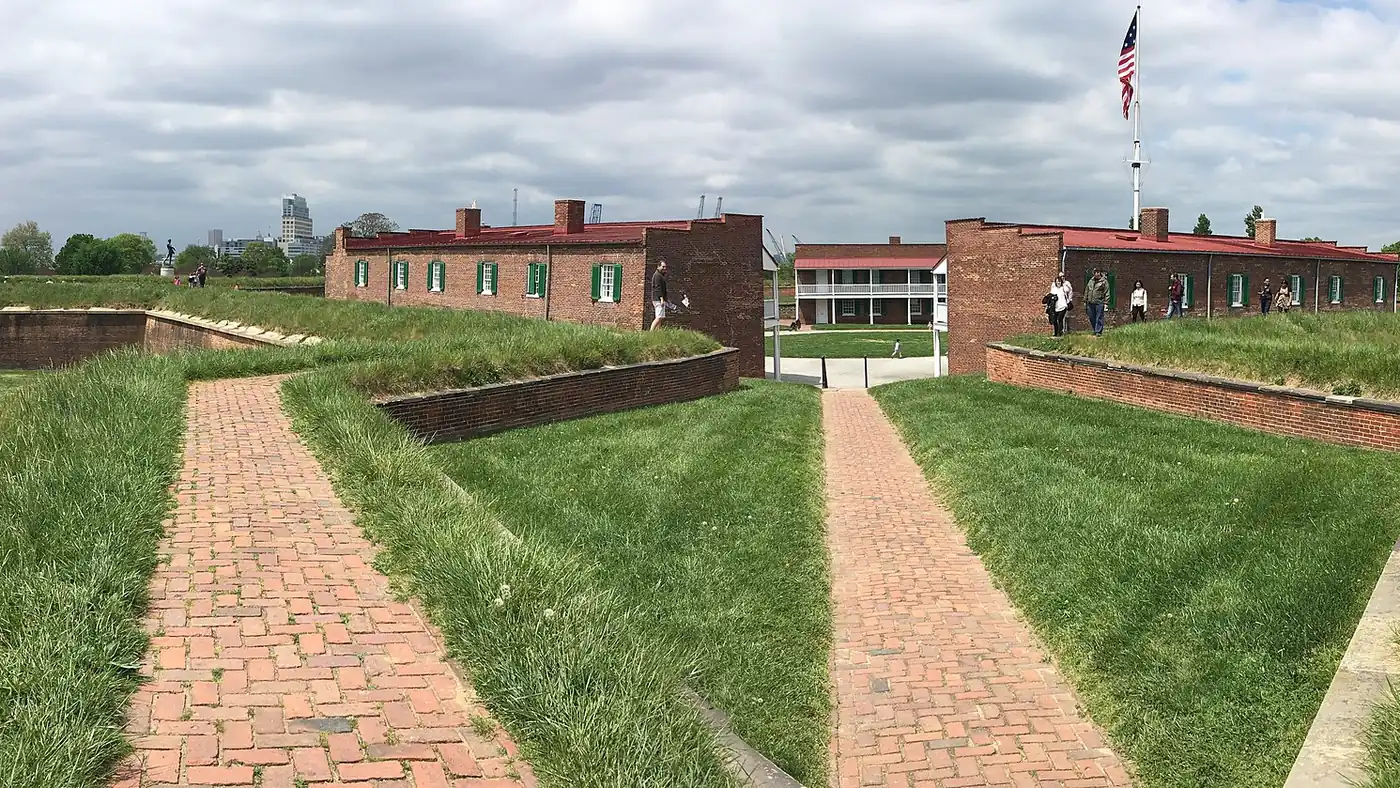
The Park Service calls the fort "The Birthplace of the American National Anthem". The ramparts in the first verse are real: you can walk along them on the water side of the star fort, as what to see at Fort McHenry explains.
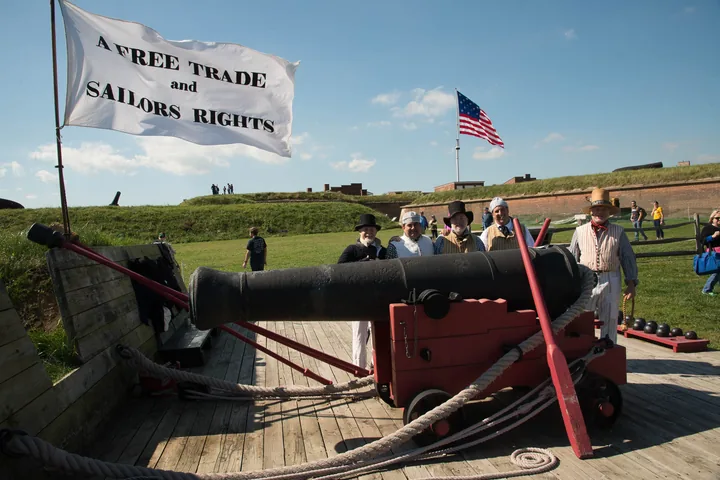
How big was the Star-Spangled Banner flag?
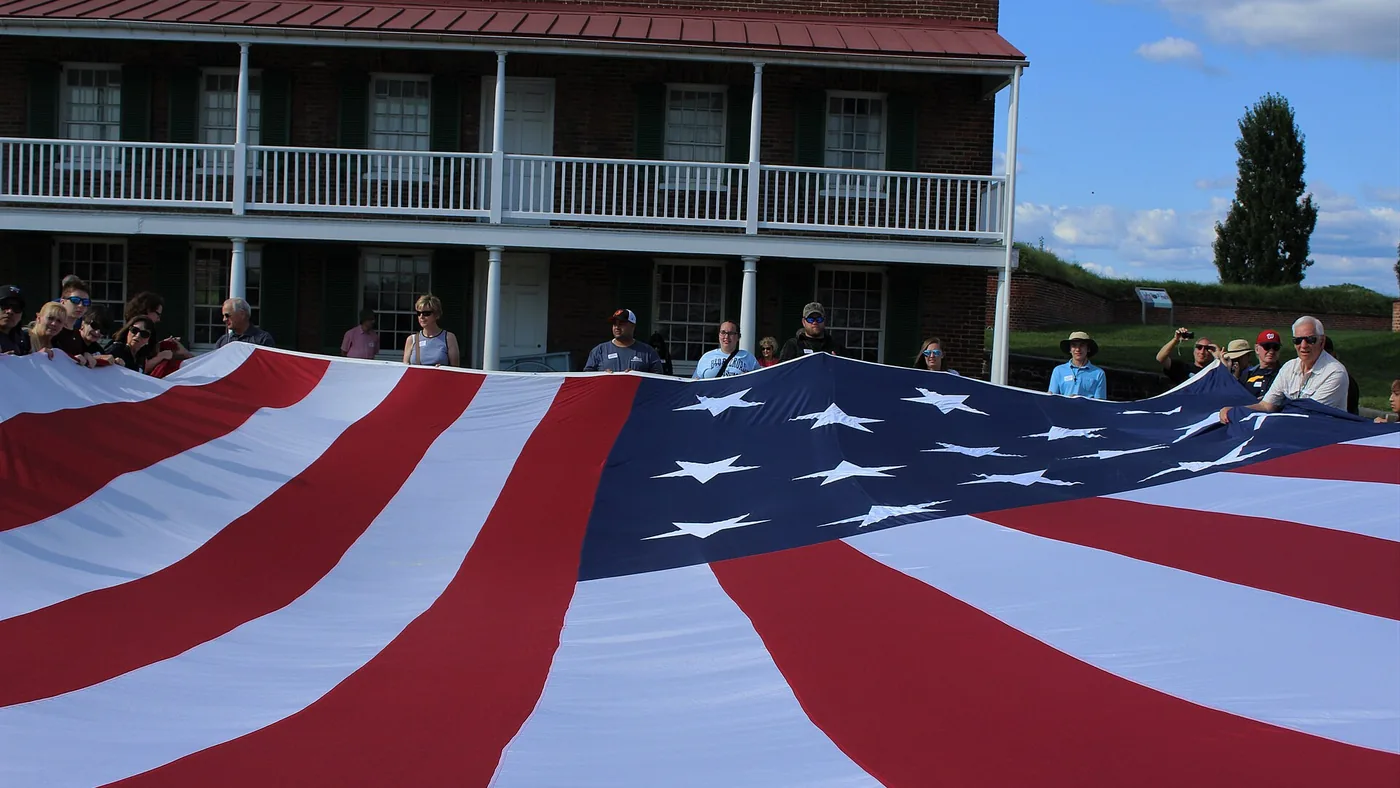
30 by 42 feet when new, with 15 stars and 15 stripes, each stripe 2 feet wide and each star 24 inches across. It measures 30 by 34 feet today, after pieces were cut away over the years.
Armistead ordered it in the summer of 1813 from Mary Pickersgill, a 37-year-old widow and professional flag maker. She sewed it in wool bunting with her 13-year-old daughter Caroline, her nieces Eliza (13) and Margaret Young (15), Grace Wisher, a 13-year-old African-American indentured servant, and possibly her mother Rebecca Young. It took seven weeks, and the flags were finished on 19 August 1813 (NPS).
She made two. The storm flag, 17 by 25 feet, probably flew through the rainy night of the bombardment and has been lost. The garrison flag went up at 9:00 a.m. on the 14th; that is the one Key saw and the one that survives. It has 15 stars because Vermont and Kentucky had joined the original 13 states.
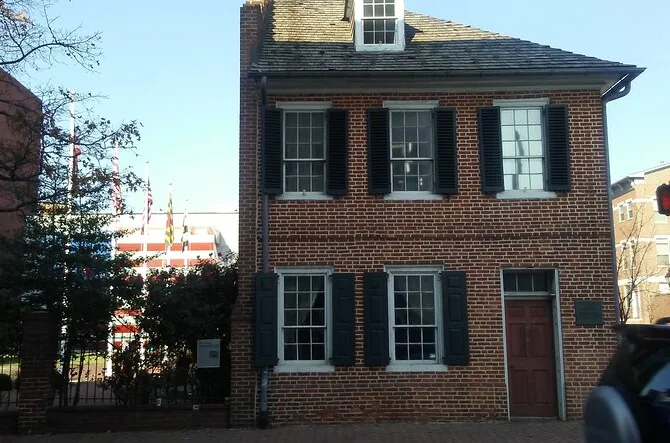
Pickersgill's house is now the Star-Spangled Banner Flag House at 844 East Pratt Street: open Tuesday to Friday 10:00 a.m. to 3:00 p.m. and Saturday 10:00 a.m. to 4:00 p.m., adults $9, under 6 free.
Pickersgill's house is a short walk from the Inner Harbor, where the Watermark cruise leaves for its 45-minute loop past the fort.
Check dates for the Inner Harbor sightseeing cruiseWhere is the original Star-Spangled Banner flag now?
At the Smithsonian's National Museum of American History in Washington, DC, where it has been since 1907. Entry is free with no ticket, and photography is not allowed in the gallery.
Armistead's grandson Eben Appleton gave it to the Smithsonian in 1907 (Smithsonian record). Today it lies in a two-storey chamber with its own air filtration, humidity and temperature control, a low-oxygen fire system and very low light. The museum is at 1300 Constitution Avenue NW and opens daily from 10:00 a.m. to 5:30 p.m. except 25 December (NMAH visit page).
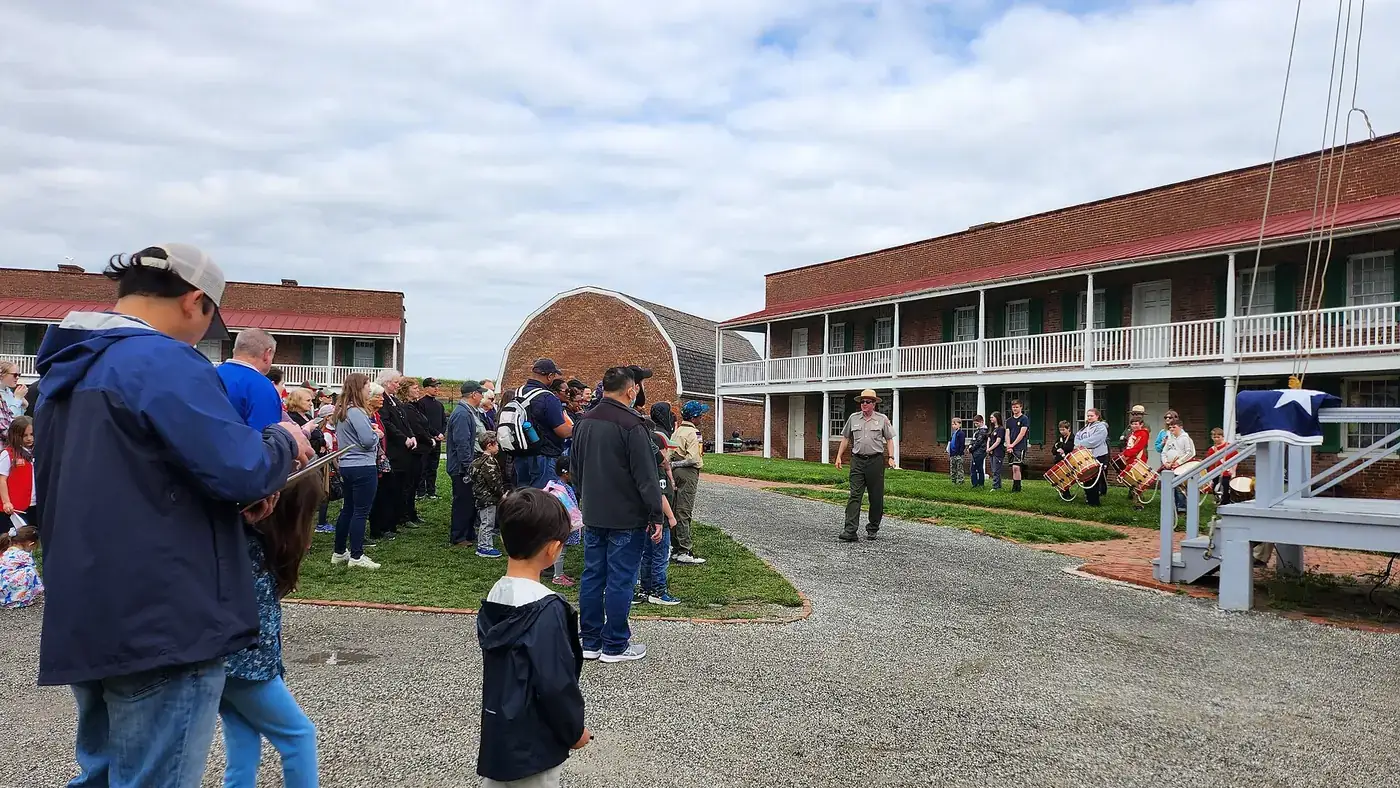
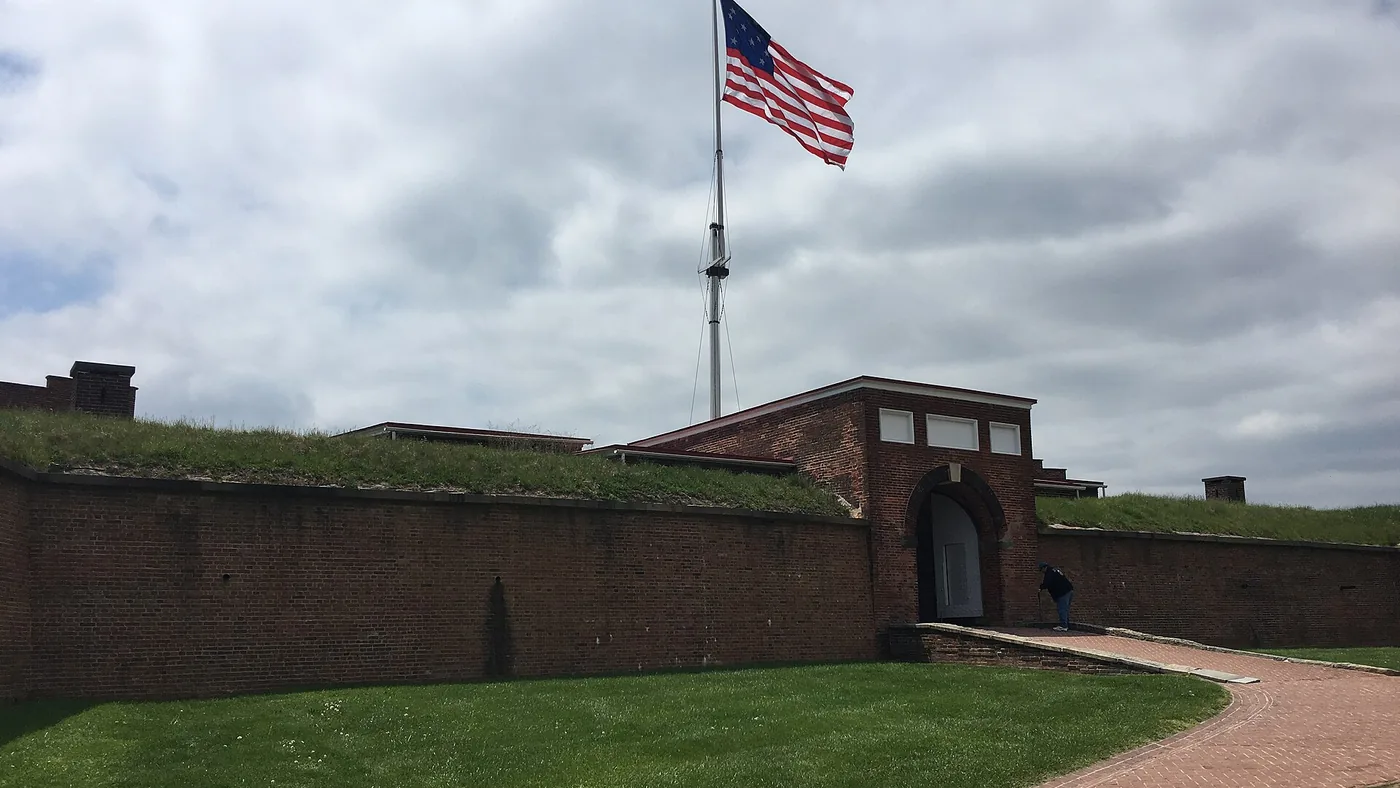
At Fort McHenry you see a replica, raised at the 10:00 a.m. flag change and swapped for an all-weather flag at 4:00 p.m. The fort was the first site to receive a presidential proclamation to fly the U.S. flag 24 hours a day, 365 days a year.
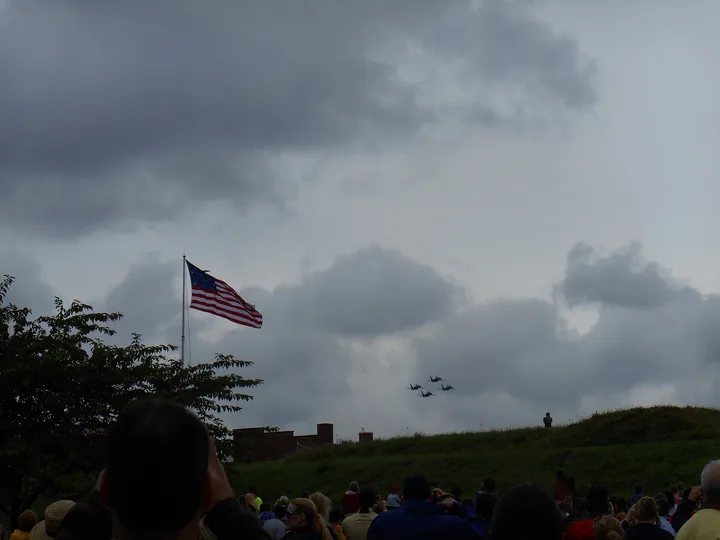
Why is Fort McHenry a national monument and historic shrine?
Because of 1814 and the anthem. The War Department made it a national park in 1925, it passed to the Park Service in 1933, and in 1939 it became the National Monument and Historic Shrine, still the only park with that title.
The fort was old news even in 1814. An earthen star fort, Fort Whetstone, guarded the point during the Revolution. Work on the brick and stone fort began in 1798 and finished in 1803, and it was named for James McHenry, a Baltimore man who was George Washington's Secretary of War (NPS). It had more lives after the battle:
- Civil War: guns aimed at pro-secession Baltimore, and a Union prison for Confederate soldiers and Maryland civilians held without trial after Lincoln suspended habeas corpus. Hence "the American Bastille".
- World War I: U.S. Army General Hospital No. 2, with 3,000 beds and more than 100 buildings on 40 acres. More than 20,000 patients passed through, and its surgeons advanced neurosurgery and facial reconstruction.
- World War II: a Coast Guard training station, returned to the Park Service after 1945.
Baltimore still marks the battle every September on Defenders' Day, celebrated since 1815 and the city's oldest holiday. The 2026 edition ran 11 to 13 September with a flag-raising re-enactment and fireworks; what else the 250th year brings is in the America 250 post.
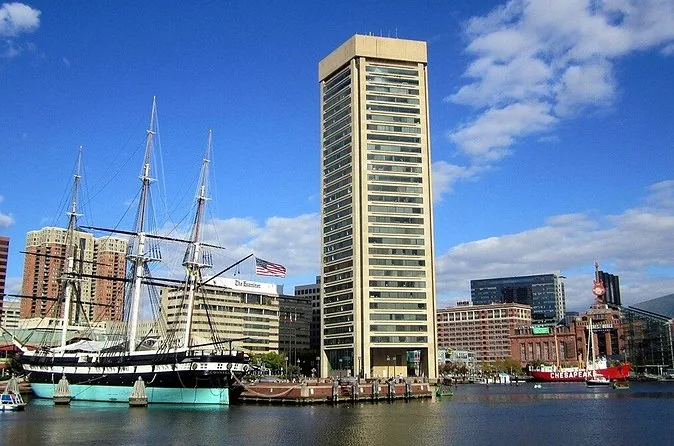
Baltimore's preservation nonprofit tells 300 years of harbor history live, with the fort from the water. New listing, no reviews yet.
Explore the history boat tour Tour detailsFrequently asked questions
Was Fort McHenry ever captured?
No. The British failed to take it in 1814, and it was never attacked again. In the Civil War it served as a Union prison.
Did Francis Scott Key watch the battle from Fort McHenry?
No. He watched from the truce ship Stephen Decatur among the British fleet, with John Skinner and Dr. William Beanes, and was not allowed ashore until the attack was over.
Who made the Star-Spangled Banner flag?
Mary Pickersgill, a Baltimore flag maker, with her daughter, two nieces, the indentured servant Grace Wisher and probably her mother. It took seven weeks and was finished on 19 August 1813.
Can you see the original flag at Fort McHenry?
No. The original is at the Smithsonian's National Museum of American History in Washington, DC, free to see. The fort flies a replica, raised every morning at 10:00.
Ready to book
Choose your harbor trip
Free cancellation up to 24 hours before on every option. Prices are from-prices in USD and move with the season.
Inner Harbor History Boat Tour
- 90 minutes on the water with a live guide
- Views of Fort McHenry from the water, no stop
- Boards at the Water Taxi dock behind 201 E Pratt St
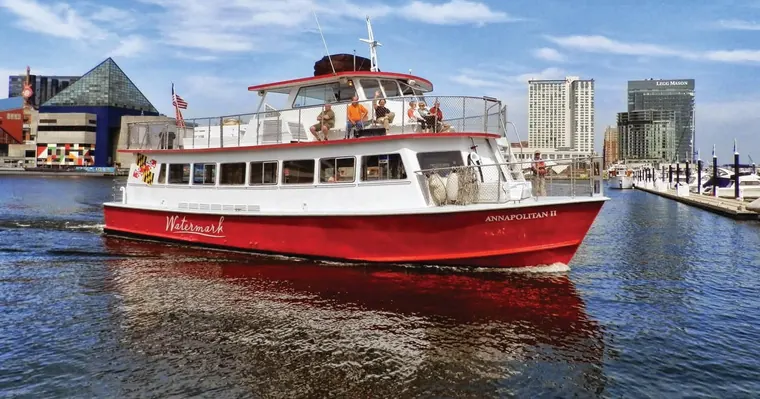
Inner Harbor Sightseeing Cruise
- 45-minute cruise with narration
- Passes Fort McHenry from the water, no stop
- Boards at the Watermark booth, 555 Light St
Small-Group Historic Neighborhoods Tour
- 90-minute guided tour by air-conditioned van
- 20-minute stop at the Fort McHenry visitor center
- Fell's Point, Mount Vernon, Federal Hill and Locust Point